I’ve watched hundreds of athletes stand frozen in front of a live play, completely paralyzed by a puck or ball changing direction at the last microsecond. They blame bad luck. They curse the bounce. But here’s the ugly truth: it’s not bad luck. It’s a systemic failure in neural processing and spatial tracking.
When a projectile shifts trajectory, your brain has roughly 150 to 200 milliseconds to recalculate its destination, fire a motor command, and get your hands or stick into the exact intersection point. If your visual processing pipeline is sluggish, you’re missing the play before you even start moving. Trust me on this—no amount of raw gym strength is going to save you if your eyes and hands aren’t speaking the same language.
To fix this, we need to bypass lazy training routines and dive straight into neuro-muscular conditioning. Forget the generic advice you read in fitness magazines. Here are the 5 drills to improve your hand-eye coordination for better deflections that will completely rewire your reaction time.
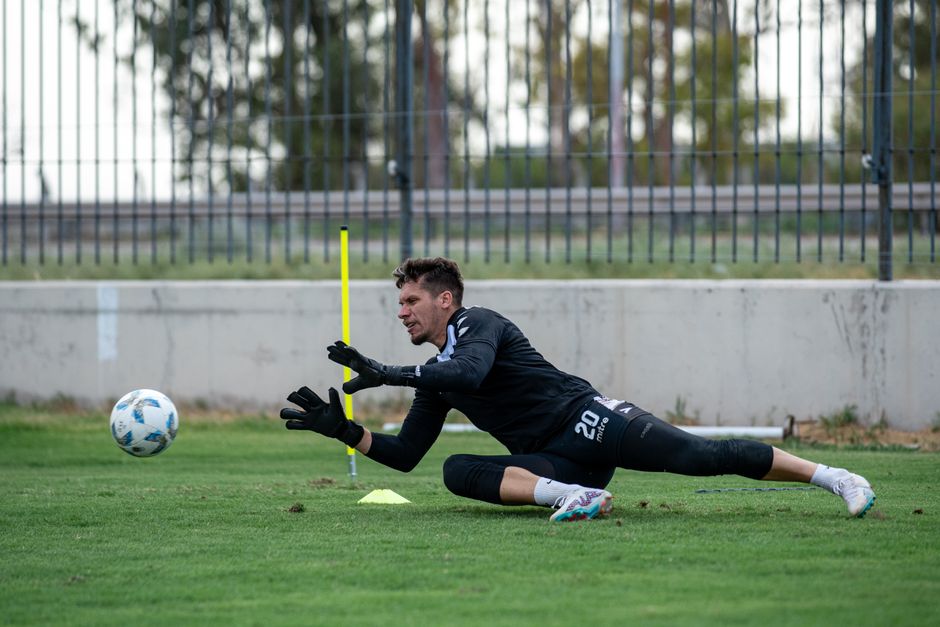
- • Drill 1: The Chaos Catch (Reaction Ball Wall Rebound)
- • Drill 2: Strobe Glasses Tracking with a Weighted Puck or Ball
- • Drill 3: Peripheral Flash Number Callouts
- • Drill 4: The Double Tennis Ball Drop and Switch
- • Drill 5: Dynamic Plane Deflection Boards
- ↳ How long before I see improvements in my deflection ability?
- ↳ Can these drills be done alone?
- ↳ Does hand-eye coordination decline with age?
- ↳ Should I do these drills before or after practice?
Key Takeaways & Quick Overview
AI Verified
- ✔I’ve watched hundreds of athletes stand frozen in front of a live play, completely paralyzed by a puck or ball changing direction at the last microsecond.
- ✔But here’s the ugly truth: it’s not bad luck.
- ✔It’s a systemic failure in neural processing and spatial tracking.
- ✔When a projectile shifts trajectory, your brain has roughly 150 to 200 milliseconds to recalculate its destination, fire a motor command, and get your hands or stick into the exact intersection point.
Drill 1: The Chaos Catch (Reaction Ball Wall Rebound)
Standard tennis ball tosses against a brick wall are a waste of your time. Your brain quickly memorizes the predictable arc and your eyes check out. Enter the six-knob reaction ball.
Stand six feet away from a solid brick or concrete wall. Throw the reaction ball hard underhand against the surface. Because of its irregular shape, it will violently ricochet in a completely unpredictable direction. Your singular job is to catch it cleanly with one hand—alternating hands with each repetition.
Keep your knees bent and your weight on the balls of your feet. Do not track the ball with your whole head; instead, lock your eyes on the point of impact on the wall and let your peripheral vision pick up the flight path. According to research cited in various sports vision training protocols, peripheral tracking is the primary differentiator between average performers and elite clutch players. Aim for 3 sets of 50 clean catches per hand. You’re going to drop it constantly at first. Good. That means your nervous system is being forced to adapt.
Drill 2: Strobe Glasses Tracking with a Weighted Puck or Ball
If you want to fast-track your visual processing speed, you need to remove visual information, forcing your brain to interpolate missing data frames. This is where strobe eyewear comes into play.
Put on programmable strobe glasses set to a moderate flash rate. Have a partner fire softballs, tennis balls, or specialized training pucks toward you while you stand about 15 feet away. As the object travels through the air, the lenses rapidly flicker between clear and opaque. Your brain has to aggressively predict the trajectory without continuous visual feedback.
When you take the glasses off, normal vision feels like moving in slow motion. The detail you can suddenly perceive is staggering. Integrate this into your routine for just 5 minutes before your main skill session. It clears out the mental static and sharpens your target acquisition instantly.

Drill 3: Peripheral Flash Number Callouts
Deflections rarely happen when you’re staring directly at the object. They happen in the messy, chaotic periphery while your eyes are locked on a defender, a goalie, or an open space.
Tape a large grid of numbers or letters to a blank wall. Stand about four feet away, fixing your gaze dead-center on a designated focal point. Have a training partner flash varying numbers of fingers randomly in your left or right peripheral vision, or use a randomized app on a tablet placed beside the wall. You must call out the numbers instantly without shifting your central gaze.
Now, add a stick or a catching mitt into the equation. While maintaining that locked central gaze, move your hands to touch specific quadrants of the grid based on auditory or visual cues from your periphery. This breaks the bad habit of ball-watching and trains your nervous system to execute complex motor tasks strictly via peripheral awareness.
Drill 4: The Double Tennis Ball Drop and Switch
Multitasking is a myth for the brain, but rapid task-switching is a tangible skill. This drill attacks hand independence and fine-motor timing simultaneously.
Hold a tennis ball in each hand at chest height. Drop the right ball, clap your hands once, and catch it before it hits the floor. Too easy? Let’s crank up the difficulty. Drop both balls simultaneously, cross your arms in mid-air, and try to catch the left ball with your right hand and the right ball with your left hand.
This looks ridiculous, and you’re going to fail miserably on your first twenty attempts. That’s the point. As noted in a National Institutes of Health study regarding motor cortex plasticity, neurological growth only occurs at the edge of failure. If a drill is comfortable, it’s useless.
Drill 5: Dynamic Plane Deflection Boards
The final piece of the puzzle is turning that raw hand-eye coordination into practical redirection skills. You can have great reflexes, but if your hands absorb the impact instead of redirecting it, your deflections will die.
Set up a mini-trampoline or a rebounder net at a slight angle. Have someone fire balls or pucks into it from varying distances and angles. Your job is not to catch the rebound, but to instantly redirect it into a small target zone (like a mini net or a taped square on the wall) using a one-touch deflection.
Focus heavily on your grip pressure. If your wrists are too stiff, the projectile ricochets wildly out of control. If they’re too loose, the deflection lacks power. You need to master active wrist tension—softening the hands just enough to absorb the incoming vector, then snapping them rigid at the exact frame of impact to alter the course.
Frequently Asked Questions
How long before I see improvements in my deflection ability?
If you commit to doing these drills for 10 to 15 minutes, four times a week, you will notice a sharp neurological shift within 14 days. Your reaction time won’t just feel faster; the game itself will literally look slower.
Can these drills be done alone?
Most of them, yes. Drills 1, 3 (using an app), and 4 require zero assistance. For Drills 2 and 5, a partner or a rebounder wall is helpful, but modern training tech and solo rebound nets make solo training entirely viable.
Does hand-eye coordination decline with age?
Raw neurological reaction speeds peak in early adulthood, but visual-spatial processing and anticipation skills can actually improve well into your 40s and 50s through consistent, targeted training. Experience compensates for minor biological drops in speed by reading cues earlier.
Should I do these drills before or after practice?
Always do them before your main practice or game as part of your dynamic warm-up. You want your nervous system fully activated, primed, and firing on all cylinders before you step onto the field or ice.