My Ranking of the 10 Most Iconic Goalie Masks in History
I’ve stood in the trenches of sports journalism long enough to smell the stale sweat of a locker room and spot raw corporate PR from a mile away. Let’s get one thing straight: hockey isn’t just a game. It’s an organized war played on ice, and the goaltender is the last man standing between absolute glory and public humiliation. When I look back at the evolution of the position, I don’t just see pads and leather. I see faces. Specifically, I see the fiberglass canvases that turned terrified targets into mythological beasts. Trust me on this—the gear tells the real story of the NHL. Forget the stat sheets for a second. We’re ranking the 10 most iconic goalie masks to ever face a slapshot, and I’m not pulling any punches.
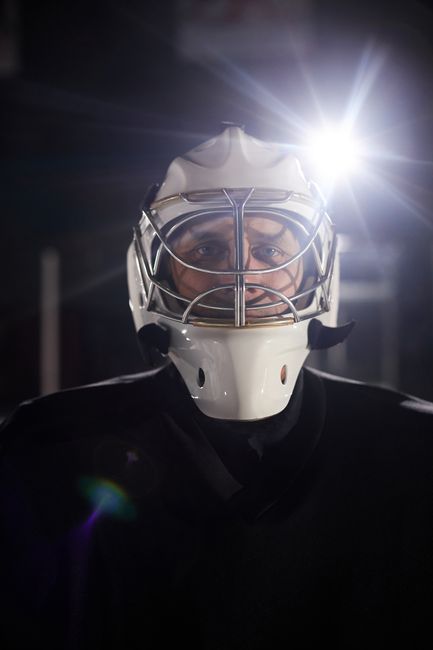
- • 10. The Plain White Terror: Jacques Plante’s Original Fiberglass
- • 9. Gerry Cheevers’ Stitch Mask
- • 8. Gilles Gratton’s "Lion" Mask
- • 7. Tony Esposito’s Classic Blackhawks Design
- • 6. Andy Moog’s Oiler-Era Masterpiece
- • 5. Gary Simmons’ "Cobra" Mask
- • 4. Ken Dryden’s Montreal Canadiens Original
- • 3. Curtis Joseph’s Cujo Mask
- • 2. Ed Belfour’s Eagle Mask
- • 1. Grant Fuhr’s Lightning Bolt Shell
- ↳ Why did goalies stop wearing fiberglass masks without cages?
- ↳ Who invented the first hockey goalie mask?
- ↳ How much do custom NHL goalie masks cost today?
- ↳ Are modern goalie masks safer than vintage ones?
Key Takeaways & Quick Overview
AI Verified
- ✔My ranking of the 10 most iconic goalie masks in history i’ve stood in the trenches of sports journalism long enough to smell the stale sweat of a locker room and spot raw corporate pr from a mile away.
- ✔Let’s get one thing straight: hockey isn’t just a game.
- ✔It’s an organized war played on ice, and the goaltender is the last man standing between absolute glory and public humiliation.
- ✔When i look back at the evolution of the position, i don’t just see pads and leather.
10. The Plain White Terror: Jacques Plante’s Original Fiberglass
You can’t talk about masks without bowing down to the pioneer. On November 1, 1959, Jacques Plante took a puck to the face from Andy Bathgate, skated off, and refused to come back out unless he could wear his practice mask. Canadiens coach Toe Blake hated it. Purists called him soft. Plante didn’t care because he wanted to keep his teeth inside his mouth. It was crude, featureless, and terrifyingly blank. It looked like a silent film villain staring you down from 60 feet away.
9. Gerry Cheevers’ Stitch Mask
Here’s where psychology entered the crease. Gerry Cheevers took a puck right to the forehead during a Boston Bruins practice, and team trainer John Forristall drew a black stitch mark on the fiberglass where the seam would have split his skin. Cheevers liked the look. Every time he took a puck to the face after that, another stitch was painted on. By the end of his career, his mask looked like a roadmap of physical trauma. It was genius, arrogant, and unforgettable.
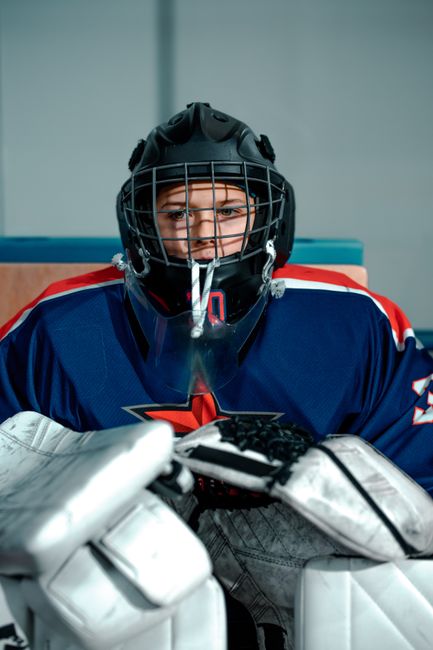
8. Gilles Gratton’s “Lion” Mask
Here’s the ugly truth about 1970s hockey: it was completely unhinged. And nobody embodied that chaos quite like Gilles Gratton, AKA “Dr. Strange-glove.” Gratton refused to play in a game unless he could wear a mask custom-molded to look like a roaring lion. Complete with detailed fur patterns, a snout, and sharp fangs, it wasn’t just protective gear—it was total psychological warfare. When you skated in on a breakaway and saw that feral beast staring back at you, your hands got heavy. That’s just facts.
7. Tony Esposito’s Classic Blackhawks Design
Black, red, and pure geometric intimidation. Tony “O” rocked a fiberglass design that integrated the Chicago Blackhawks’ iconic striping directly into the facial contours. It wasn’t overly busy. It didn’t need cartoon characters or explosions. It framed his eyes in a way that made him look like an owl waiting to pounce on a mouse. When you visit the Hockey Hall of Fame, this is the piece of history that stops people dead in their tracks.
6. Andy Moog’s Oiler-Era Masterpiece
Bright, loud, and unmistakably 1980s. Andy Moog’s Cooper mask featuring the Edmonton Oilers’ drop-shadow logo and oil drops dripping down the cheeks is a masterclass in branding. It matched the high-flying, unstoppable offense of Gretzky and Messier. Moog stood his ground behind a powerhouse, and his facial armor became synonymous with that terrifying dynasty in Alberta.
5. Gary Simmons’ “Cobra” Mask
If you played for the California Golden Seals, you had to make noise somehow because nobody was watching your games on national television. Enter Gary Simmons, nicknamed “Cobra.” His mask featured a giant, hood-spreading cobra stretched across the entire fiberglass dome. It was aggressive, slightly cartoonish, and completely iconic. It remains one of the most sought-after collector pieces in hockey history for a reason.
4. Ken Dryden’s Montreal Canadiens Original
Simple. Clean. Legendary. Ken Dryden didn’t need flashy artwork to intimidate opponents. He just won Stanley Cups—six of them, to be exact. His plain white Cooper mask with the simple red, white, and blue Canadiens lines is burnt into the collective memory of every hockey fan who lived through the 1970s. It represents an era of quiet confidence and sheer dominance.
3. Curtis Joseph’s Cujo Mask
Let’s jump forward to the modern era. When Curtis Joseph broke into the league, he needed a persona to match his fierce, acrobatic style. Enter the Stephen King-inspired “Cujo” rabid dog design, complete with bared teeth snarling across the cage. Designed by airbrush legend Ray Bishop, this mask wasn’t just cool; it defined an entire generation of goaltenders who wanted their equipment to hiss at the opposition.
2. Ed Belfour’s Eagle Mask
Shiny chrome, piercing blue eyes, and a predatory eagle swooping down over the forehead. “The Eagle” didn’t just wear a nickname; he wore it in high-definition chrome and crystal clear paint. Ed Belfour was intense, fiery, and sometimes downright scary on the ice. His mask captured that exact manic energy. When he squatted in the butterfly, the reflection of the arena lights off that chrome cage signaled danger.
1. Grant Fuhr’s Lightning Bolt Shell
Taking the crown is the master of cool under pressure. Grant Fuhr won games when his team gave up five goals a night, and he did it looking like a superhero. His airbrushed mask with the sharp, electric lightning bolts slicing across a black background is the absolute pinnacle of goalie art. It screams speed, ice, and ice-water veins. No mask captures the golden era of the NHL better than Fuhr’s lightning bolt masterpiece.
Frequently Asked Questions
Why did goalies stop wearing fiberglass masks without cages?
Safety, plain and simple. The original fiberglass shells protected against blunt force to a degree, but pucks kept getting harder, and slapshots kept getting faster. After horrific injuries—most notably to Jim Rutherford and Gerry Cheevers—the combination fiberglass shell and wire cage (popularized by Vladislav Tretiak and Dom Hašek later on) became mandatory to save facial bones and eyeballs.
Who invented the first hockey goalie mask?
While experimental leather face protectors existed earlier, Jacques Plante of the Montreal Canadiens is universally credited with introducing the first practical fiberglass mask to the NHL in 1959 after taking a slapshot to the nose.
How much do custom NHL goalie masks cost today?
A professional-grade, custom-fitted NHL goalie mask typically costs between $1,500 and $3,000 raw. Once you factor in the custom airbrush artistry from elite painters, the final price tag can easily climb past $5,000 to $10,000 per bucket.
Are modern goalie masks safer than vintage ones?
Without a doubt. Modern masks use advanced composite materials like Kevlar, carbon fiber, and fiberglass resins, paired with multi-density VN (vinyl nitrile) or EPP foams designed to absorb and disperse high-velocity impacts far better than old-school 1970s plastics.